

Santa Cruz, San Francisco & the Peninsula
Surf camps in Santa Cruz & Bay Area
Northern California's surf heartland. Santa Cruz's West Side (Steamer Lane, Pleasure Point, Cowell's, The Hook) runs a dense cluster of beginner-to-advanced breaks around one town, San Francisco's Ocean Beach is a world-class but genuinely heavy beach break, and Pillar Point's Mavericks is one of the planet's most dangerous big-wave spots. Cold water year-round — a 4/3mm wetsuit with boots, hood and gloves is the norm, not the exception.
Surf camps in Santa Cruz & Bay Area: quick answers
Where are the surf camps in Santa Cruz & Bay Area?
We list 3 surf camps in Santa Cruz & Bay Area across 2 towns: Cowell's Beach and Linda Mar / Pacifica State Beach.
- Cowell's Beach: Richard Schmidt Surf School, Club Ed Surf School and Camps
- Linda Mar / Pacifica State Beach: Surf Camp Pacifica
How much does a surf camp in Santa Cruz & Bay Area cost?
The one camp we list in Santa Cruz & Bay Area with a published weekly rate starts from $450/week.
- 1 of 3 camps in our catalog publish a weekly rate.
- Entry-level option: from $450/week.
Best time to surf in Santa Cruz & Bay Area
The best time to surf in Santa Cruz & Bay Area is Sep–Nov · Mar–Apr.
- Peak months: Sep, Oct, Nov, Mar, Apr.
Last verified against the camps' own sources:
Surfing in Santa Cruz & Bay Area, month by month
Why Santa Cruz & the Bay Area
This region packs an enormous range into about 90 minutes of Highway 1.
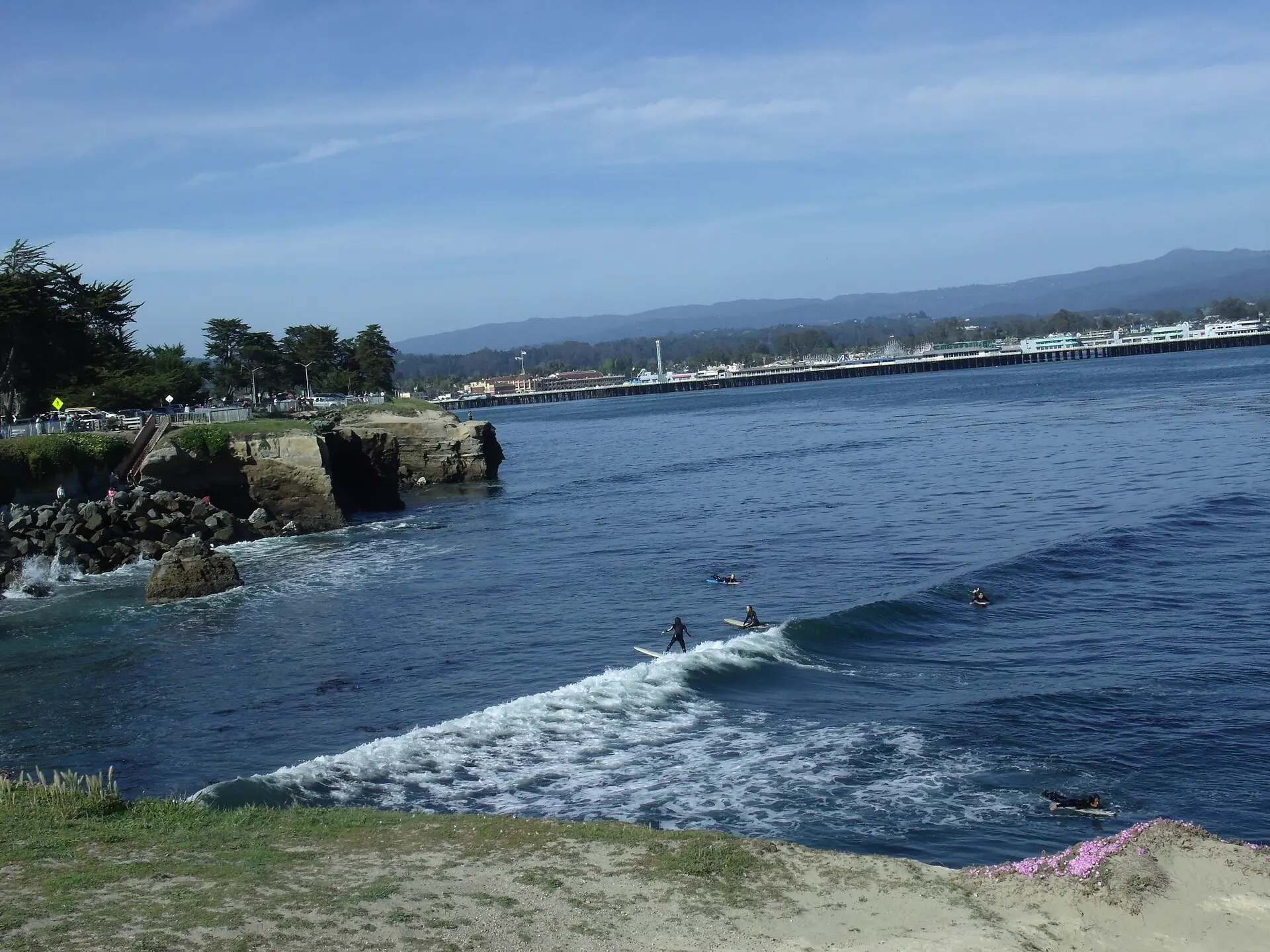
- Cowell's Beach (Santa Cruz) is a soft, sandy beginner wave right in town — the classic first-lesson break on this coast.
- Steamer Lane, Pleasure Point and The Hook are Santa Cruz's intermediate-to-advanced reef and point breaks, each with real localism and rock hazards.
- Manresa State Beach, south of Santa Cruz, is an exposed, often-overlooked beach break with strong rip currents.
- Ocean Beach in San Francisco is a world-class but punishing beach break — heavy shorebreak, powerful rips, and documented drownings. It is not a place to learn.
- Linda Mar / Pacifica State Beach, just south of SF, is the Bay Area's go-to beginner and surf-school beach.
- Mavericks, off Pillar Point near Half Moon Bay, is a giant big-wave reef break that can exceed 50–60 feet. This is an expert, big-wave-only, boat- or jet-ski-assisted wave with a documented history of fatalities (Mark Foo, 1994; Sion Milosky, 2011). It is not a surf spot for anyone outside the elite big-wave community — it belongs on this list as a sight to watch from the bluffs, never to paddle out at.
When to go
- Sep–Nov: Often the best window — warmer water, lingering NW swell, offshore wind pattern, and thinner summer-fog crowds.
- Mar–May: Spring groundswells, cold but surfable, fewer people than summer.
- Dec–Feb: Biggest swells of the year and when Mavericks runs — cold, powerful, advanced-to-expert conditions region-wide.
- Jun–Aug: Smallest and most consistent for beginners at Cowell's and Linda Mar, but also fog ("Karl") and the most crowded months.
Wetsuit note
Water temperature runs roughly 52–58°F (11–14°C) year-round — this is not a warm-water trip. A 4/3mm steamer is the regional standard, with boots, a hood in winter, and gloves for dawn patrol. Cowell's and Linda Mar are the forgiving ends of the spectrum; Ocean Beach and Mavericks are serious, hazardous water even for strong surfers.
Getting around
Fly into San Francisco (SFO) or San Jose (SJC). Santa Cruz is about 35–45 minutes from either airport; Pacifica and Ocean Beach are a short drive from SFO. A car is essential — the breaks are spread along Highway 1 and there is no surf-camp-with-lodging scene here, similar to San Diego and Hawaii: book accommodation and a surf school separately.