Vancouver Island
Canada’s surf town — a cold, consistent Pacific coast where the biggest swell arrives in the least forgiving months, and the learning happens on long sand beaches inside a national park.
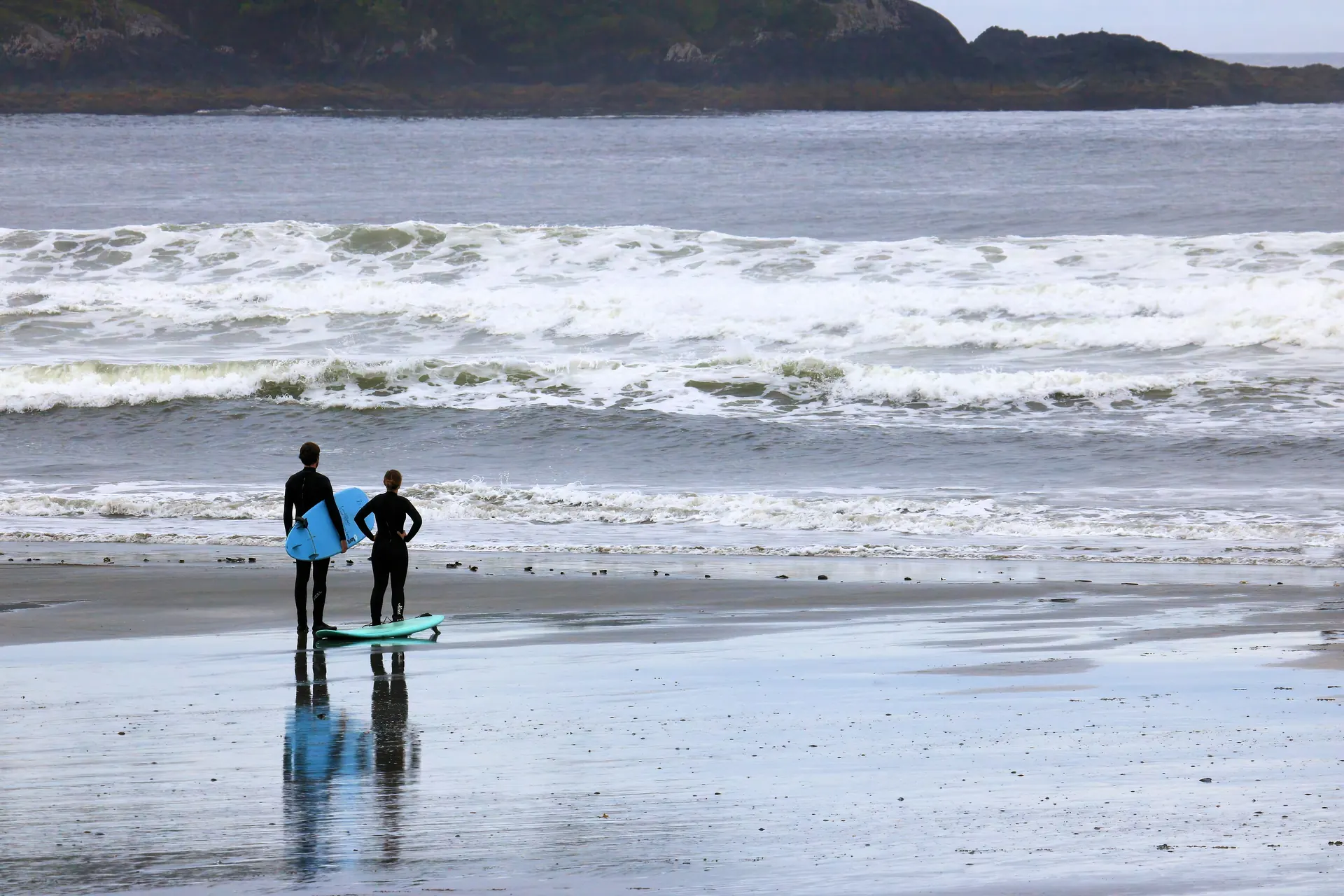
Photo: Cox Bay Tofino Surfer Decision Time 2475 by ImagePerson · CC BY 4.0 via Wikimedia Commons
Surf camps in Vancouver Island: quick answers
Where are the surf camps in Vancouver Island?
We list 3 surf camps in Vancouver Island across 3 towns: Tofino, Chesterman Beach and Cox Bay.
- Tofino: Pacific Surf Co
- Chesterman Beach: Swell Tofino
- Cox Bay: Long Beach Lodge Resort
Best time to surf in Vancouver Island
The best time to surf in Vancouver Island is Jun–Oct.
- Peak months: Jun, Jul, Aug, Sep, Oct.
Last verified against the camps' own sources:
Surfing in Vancouver Island, month by month
Why Vancouver Island
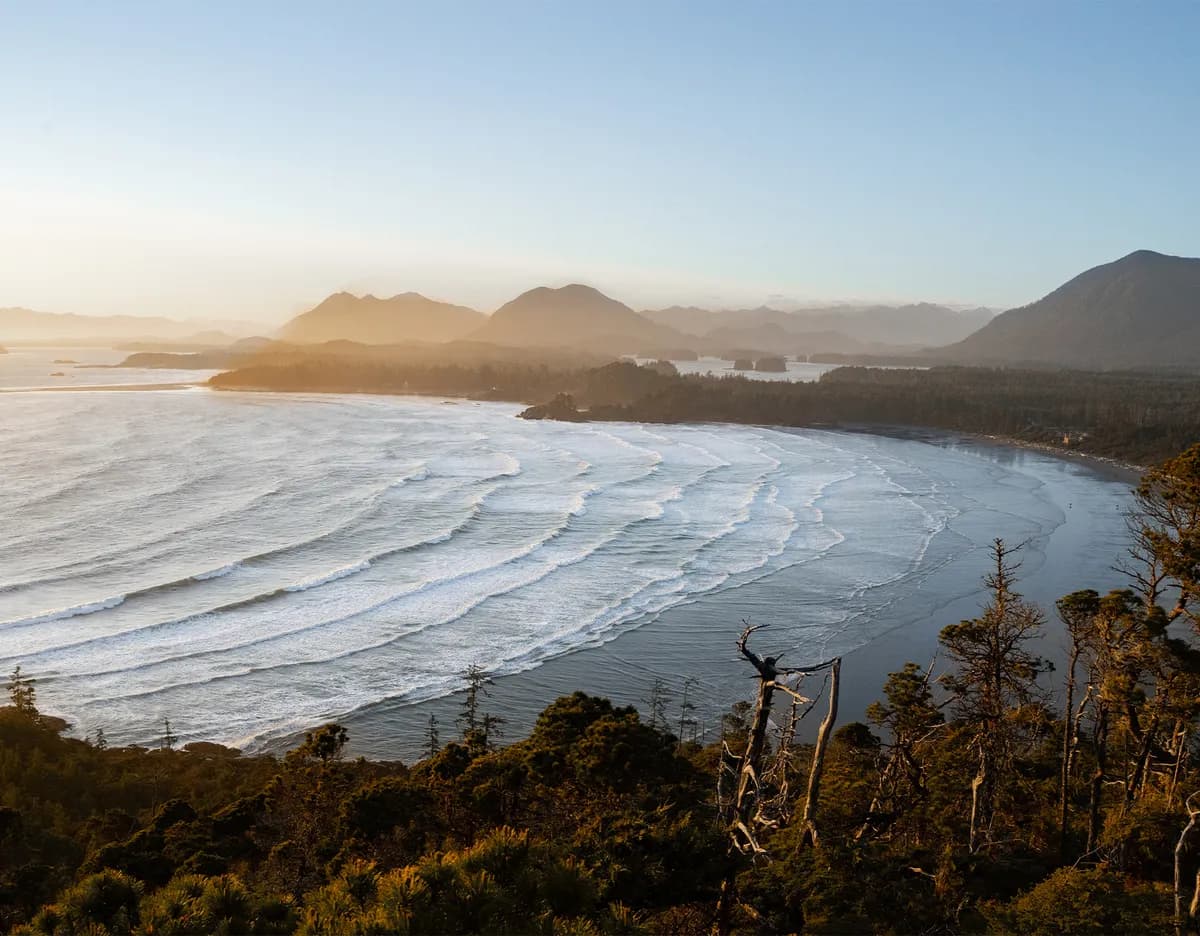
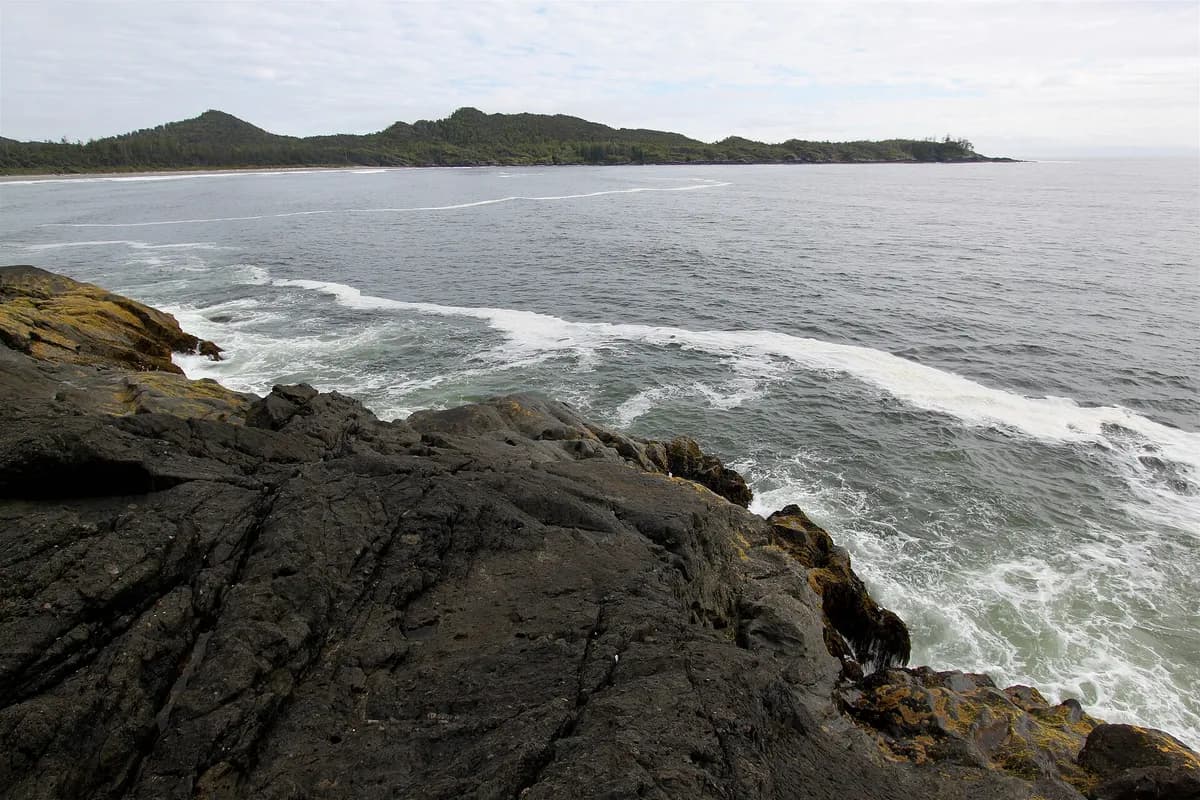
Tofino is the only place in Canada with a surf scene rather than a handful of surfers, and it exists because the west coast of Vancouver Island faces thousands of kilometres of open North Pacific. Swell arrives all year. So does the cold.
The waves themselves are unusually welcoming: long, sandy, gently-shelving beaches — Cox Bay, Chesterman, Long Beach — inside Pacific Rim National Park, with no reef to fall on and enough room that a crowded day here would be an empty one in California. It is a genuinely good place to learn, provided you are honest with yourself about the water temperature.
When to go
The months listed above are June to October, and they are not the months with the best waves. They are the months this coast is worth travelling to if you are still learning.
- Jun–Aug is small, sunny and forgiving — the season the schools are built around, and the warmest water of the year at about 14°C in August. Be realistic about size: the sourced swell record puts July and August well below the threshold for open-ocean groundswell, so what you get is short-period wind swell and, some days, nothing at all. Perfect for a first lesson, thin for anyone who can already surf.
- Sep–Nov is the best all-round window. The swell picks up while the water is still relatively warm, and it suits every level.
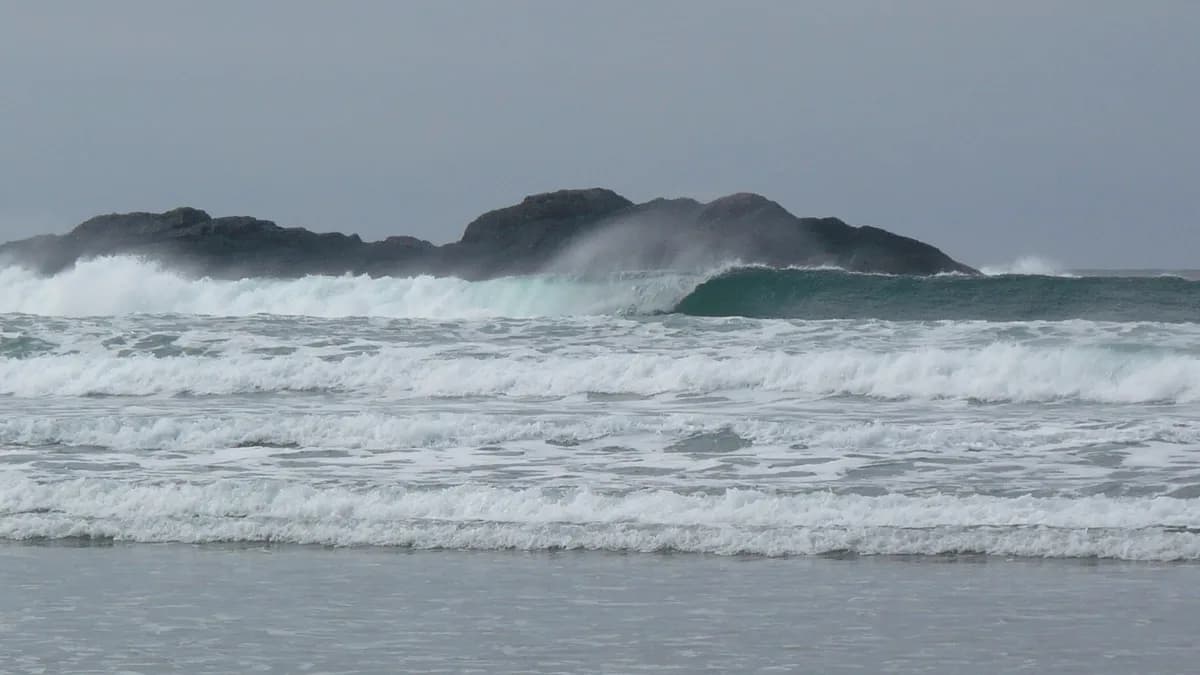
- Dec–Mar is when the coast shows what it can really do: the biggest, most consistent swell of the year, with storms producing waves of 20 to 30 feet. It is also the coldest water — around 7°C in February and March — and it is for experienced surfers only.
What to wear, because it decides your trip
This is cold-water surfing and no listing here should suggest otherwise.
- Summer: a 3/2 mm wetsuit.
- Autumn: 4/3 mm as the water drops.
- Winter: 5/4 mm with a hood, boots and gloves. Not optional.
Every school rents the right suit for the season, which is the main reason to take a lesson here even if you can already surf.
What you will and will not find
There are no surf-and-stay camps in Tofino. Instruction and accommodation are separate businesses: you book a bed, then book lessons. Several hotels bundle the two into a package with a local school, and those are genuine, but there is no operator running a week-long residential camp the way Portugal or Costa Rica does. That is the town, not a gap in this guide.
Getting around
Tofino is a long way from anywhere: about a five-hour drive from Victoria, or a short flight into Tofino-Long Beach (YAZ). The beaches are spread over 15 km of highway south of town, and the schools move between them depending on the forecast, so a car makes the trip considerably easier.