
San Diego
Surf camps in California
San Diego is the gentlest introduction to Californian surfing — La Jolla Shores and the North County beach breaks are sandy, forgiving and lesson-friendly, with cold-ish water year-round and a wetsuit in every season.
Surf camps in California: quick answers
Where are the surf camps in California?
We list 3 surf camps in California across 3 towns: La Jolla Shores, Pacific Beach and Moonlight Beach.
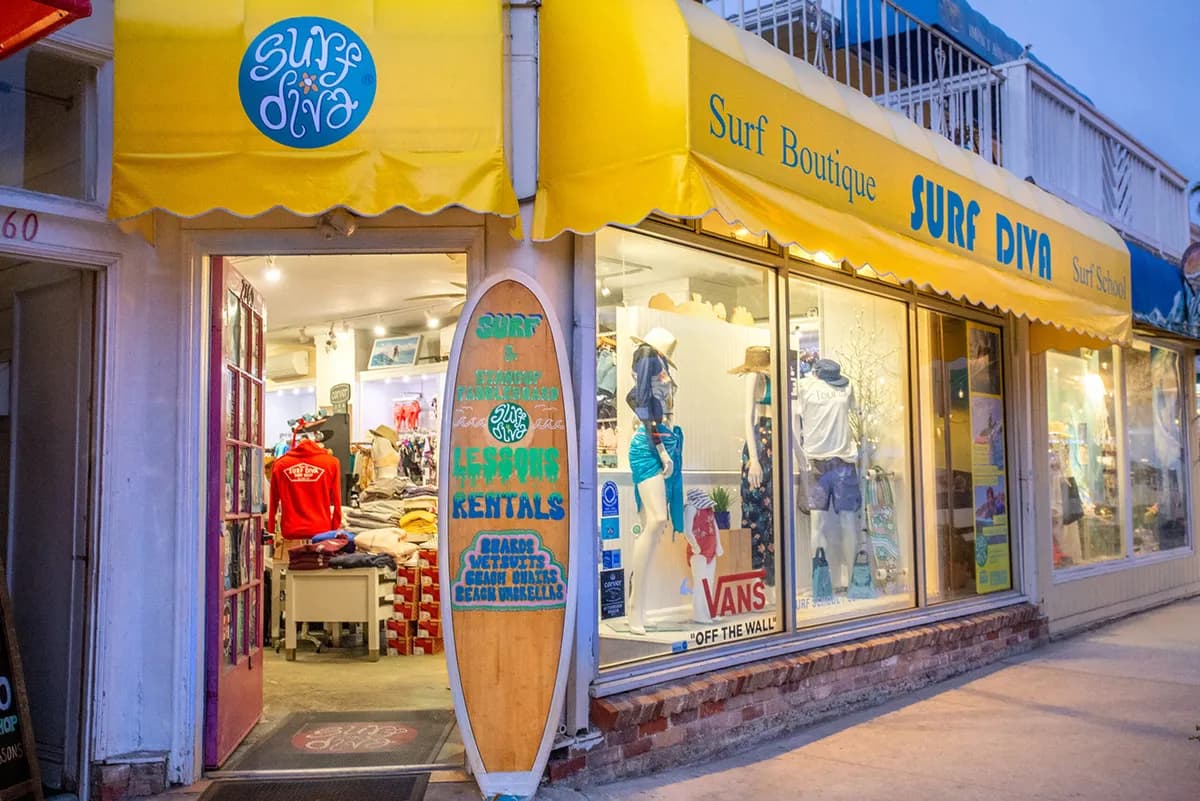
- La Jolla Shores: Surf Diva
- Pacific Beach: Pacific Surf School
- Moonlight Beach: Leucadia Surf School
How much does a surf camp in California cost?
Published weekly rates for the camps we list in California start at anywhere from $495/week to $600/week, depending on the camp.
- 3 of 3 camps in our catalog publish a weekly rate.
- Entry-level option: from $495/week.
- Top-end option: from $600/week.
Best time to surf in California
The best time to surf in California is May–Oct.
- Peak months: May, Jun, Jul, Aug, Sep, Oct.
Last verified against the camps' own sources:
Surfing in California, month by month
Why San Diego
Southern California packs an enormous range into an hour's drive, and San Diego is its friendliest corner.
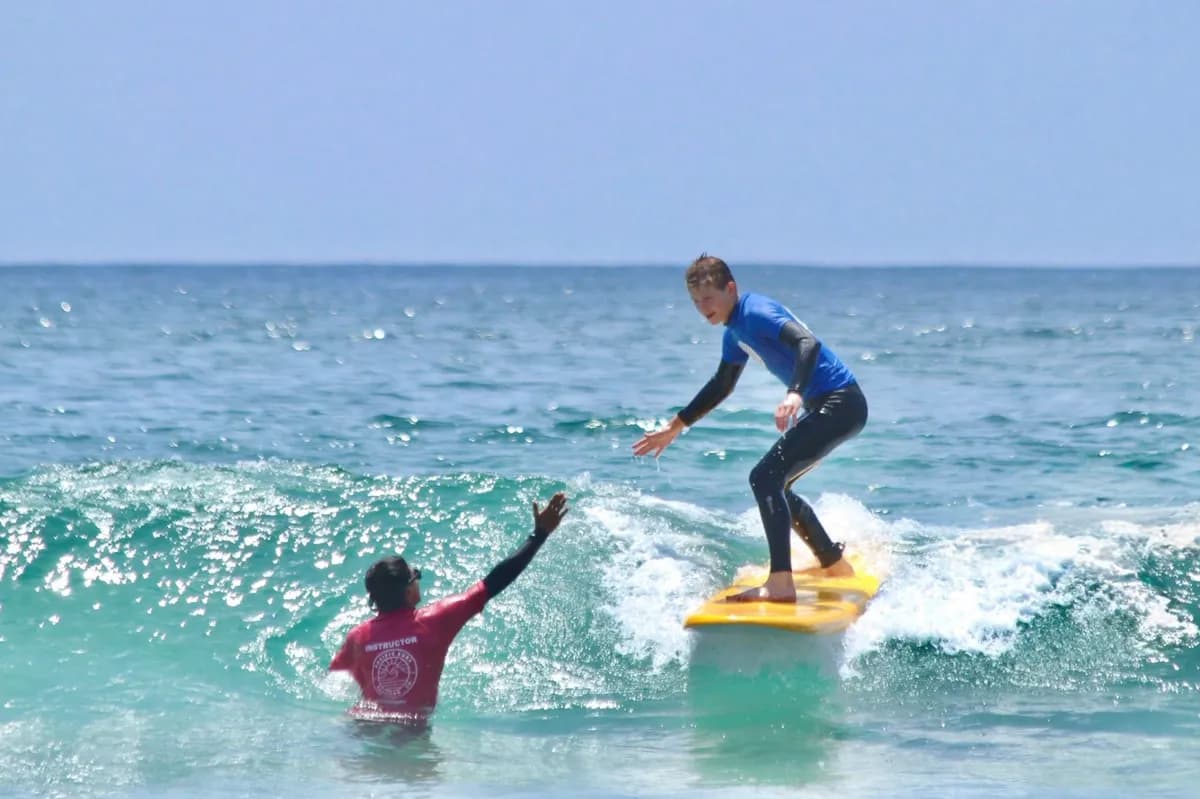
- La Jolla Shores is a soft, sandy-bottom beach break and one of the safest places in California to learn.
- Pacific Beach and the North County breaks (Encinitas, Moonlight) are the everyday beach-break diet — fun, inconsistent, sometimes excellent.
- Lower Trestles, an hour north, is one of the best performance waves in the country and one of the most crowded.
- Blacks Beach is a heavy, canyon-fed beach break for strong surfers only.
Wear a wetsuit. Even in August the water rarely gets truly warm, and in winter a 4/3 is standard. People underestimate this constantly.
When to go
- May–Oct: the warmest water and the south-swell season — the friendliest window, and when lessons run.
- Nov–Apr: bigger northwest swells, colder water, better waves for experienced surfers.
Getting around
Fly into San Diego (SAN). You will want a car — the good breaks are spread up the coast, and the difference between a great day and a wasted one is often a twenty-minute drive. As in Hawaii, there are no surf-and-stay camps here: you book lodging and a surf school separately.
Watch before you go
6 videos about surfing California, from two surfers who review breaks on the road.
- Malibu: What's it Really Like?
Dan Harmon · Location review · Aug 2026
- Surfing Lower Trestles: What's it Really Like?
Dan Harmon · Location review · Jul 2026
- What SURFING LOWER TRESTLES Is REALLY Like - Feat. Kolohe Andino
Kale Brock · Location review · Jun 2019
- What SURFING MALIBU Is Really Like | California
Kale Brock · Location review · Jun 2019
- The Discovery, Rise (& Near Death) of Lower Trestles
Dan Harmon · History & local issues · Aug 2026
- Inside: Lunada Bay's Localism Lunacy...
Dan Harmon · History & local issues · Oct 2025
Independent creators, not affiliated with Surf Scout. Links open on YouTube. Topic chips jump to that part of the video. Conditions change, so check the upload date.
Flying your boards to California
San Diego International Airport
Airport code SAN. Airlines on our checked list serving it:
- Air CanadaFee applies
- Air Francestarts May 3, 2027No surcharge
- Alaska AirlinesNo surcharge
- British AirwaysFree ≤ 240 cm
- Copa AirlinesFee applies
- Delta Air LinesNo surcharge
- Hawaiian AirlinesNo surcharge
- Japan AirlinesFee applies
- KLMFee applies
- LufthansaFee applies
- United AirlinesNo surcharge
- WestJetFee applies
Air France: 180 cm limit on certain aircraft with smaller cargo holds.
Watch out · Air France: On some Air France aircraft the cargo hold cannot fit items over 180 cm, even though the general 300 cm total-linear-dims ceiling allows more — your board's actual acceptance can depend on which aircraft operates your route.
Watch out · Delta Air Lines: Delta Connection regional flights cap item length at 72 in/183 cm. That's a straight single-dimension length cap, not directly comparable to the mainline 292 cm figure (which is a TOTAL linear L+W+H measurement) — but a board whose own length alone is over 183 cm can still be refused on a regional leg even though it is fine on Delta mainline aircraft.