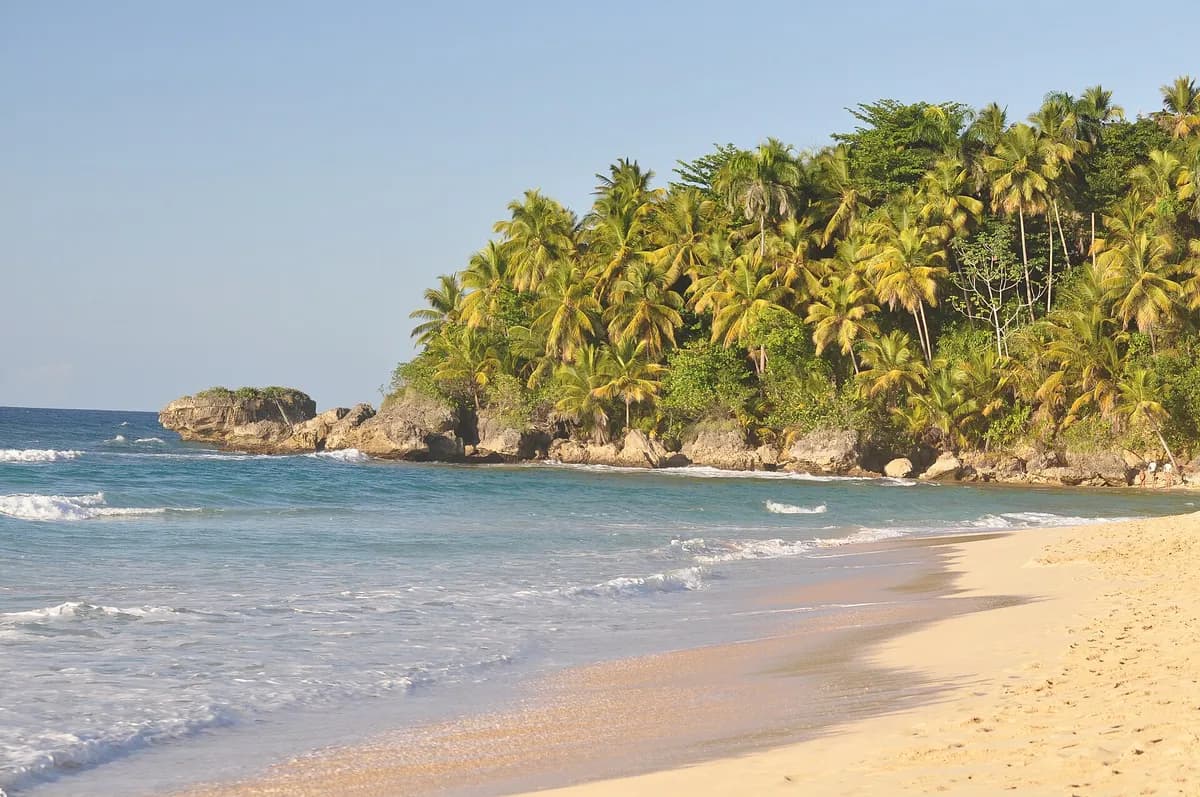

North & East Coast
Surf camps in the Dominican Republic
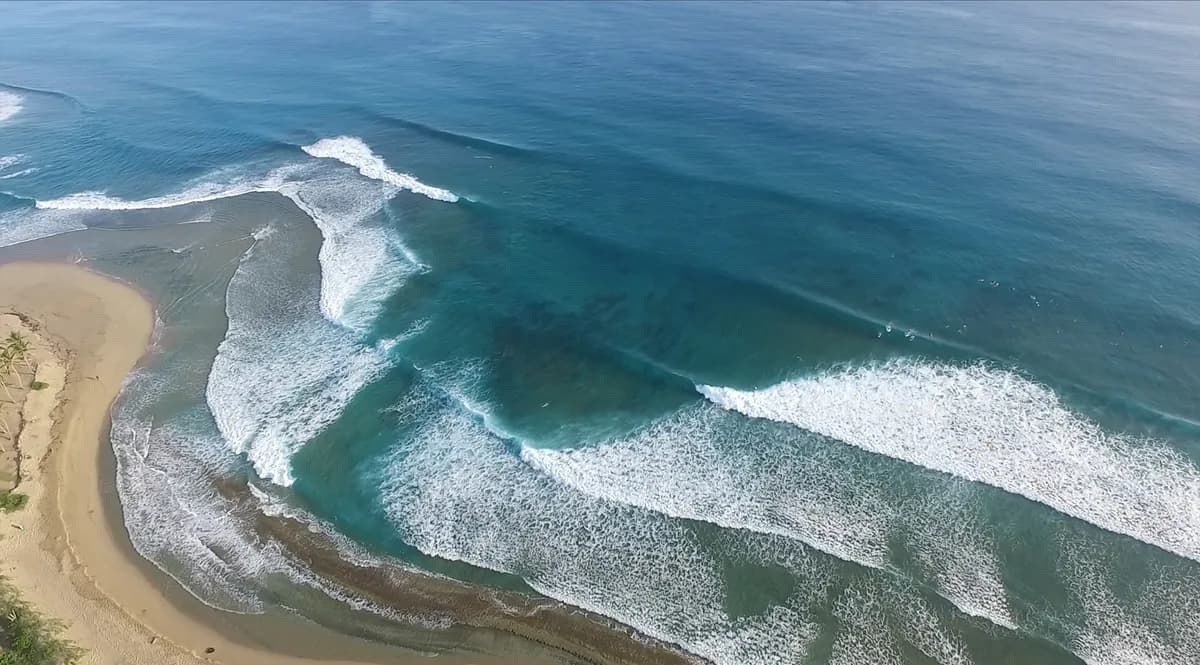
Warm-water surf year-round, at its best in the Northern-Hemisphere winter (roughly November–April) when North Atlantic groundswells hit. The north coast around Cabarete — and its marquee break, Playa Encuentro — is the country's surf capital and the densest cluster of surf camps in the Caribbean; Playa Grande, east of Cabarete, is a powerful step-up. On the east coast, the Punta Cana resort strip surfs at Playa Macao, where the scene is day-lesson schools rather than stay-camps.
Surf camps in Dominican Republic: quick answers
Where are the surf camps in Dominican Republic?
We list 12 surf camps in Dominican Republic across 4 towns: Cabarete, Playa Encuentro, Punta Cana and Playa Bonita.
- Cabarete: Swell Surf Camp, El Encuentro Surf Lodge, Surfbreak Cabarete and 2 more
- Playa Encuentro: Bobo's Point Surf School, Parallel Surf, Wave Soul Retreats and 1 more
- Punta Cana: Macao Surf Camp, Punta Cana Surf Adventure
- Playa Bonita: Carolina Surf School
How much does a surf camp in Dominican Republic cost?
Published weekly rates for the camps we list in Dominican Republic start at anywhere from $210/week to $1150/week, depending on the camp.
- 8 of 12 camps in our catalog publish a weekly rate.
- Entry-level option: from $210/week.
- Top-end option: from $1150/week.
Best time to surf in Dominican Republic
The best time to surf in Dominican Republic is Nov–Apr.
- Peak months: Nov, Dec, Jan, Feb, Mar, Apr.
Last verified against the camps' own sources:
Surfing in Dominican Republic, month by month
Why the Dominican Republic
The DR is the Caribbean's most established learn-to-surf destination: warm water all year (no wetsuit), a forgiving flagship beach in Playa Encuentro, and more surf camps and schools per kilometre than anywhere else in the region. Its two surf zones are very different, and worth treating separately.
When to go
- Nov–Apr (winter): Prime. North Atlantic cold-front groundswells light up the north coast — Encuentro and, when it's big, Playa Grande — with the cleanest, most consistent waves. This is the season to plan a surf trip around.
- May–Oct (summer): Smaller and often flat on the north coast, though Encuentro still catches morning waves most days; the east coast (Macao) can pick up late-summer/autumn hurricane-season groundswells. Warm and quiet, fine for first-timers.
Conditions, swell & water temperature
- Water temperature: Warm all year — about 26–29°C / 79–84°F, coolest around January–March and warmest August–October. Boardshorts or a bikini every month; no wetsuit needed.
- Air temperature: Daytime highs of roughly 28–31°C / 82–88°F year-round, humid, with more rain May–November.
- Swell & wave size: The north coast (Encuentro) runs chest-to-overhead on the winter North Atlantic swells (Nov–Apr) and is often waist-high or smaller in summer; Playa Grande is bigger and heavier on the same swells. Playa Macao near Punta Cana is smaller and more beginner-friendly, best on winter north swells and late-summer groundswells.
- Wind: Trade winds blow from the E/NE; mornings are usually the cleanest, glassy window before the wind builds through the afternoon.
- Hurricane season: June–November (most active Aug–Oct) can send good groundswell but also storms — watch the forecast if you travel then.
The two zones in this guide
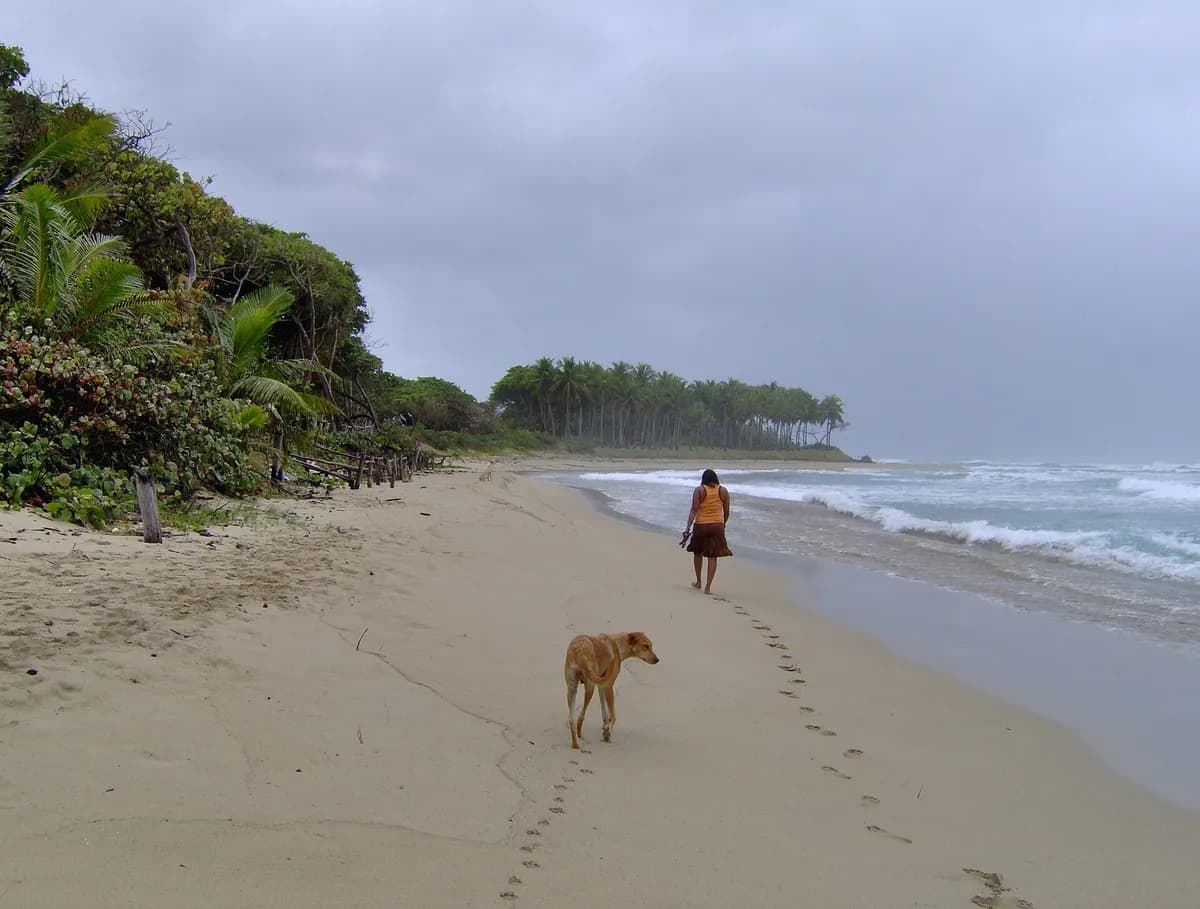
- North coast (Cabarete / Playa Encuentro): the surf capital. Encuentro is a cluster of reef and sand peaks a few km west of Cabarete, from a sandy beginner zone to punchy reef breaks — and the base for the country's best surf-and-stay camps and schools. Playa Grande (near Río San Juan, ~1 hr east) is a heavier, picture-perfect beach break for improvers and up.
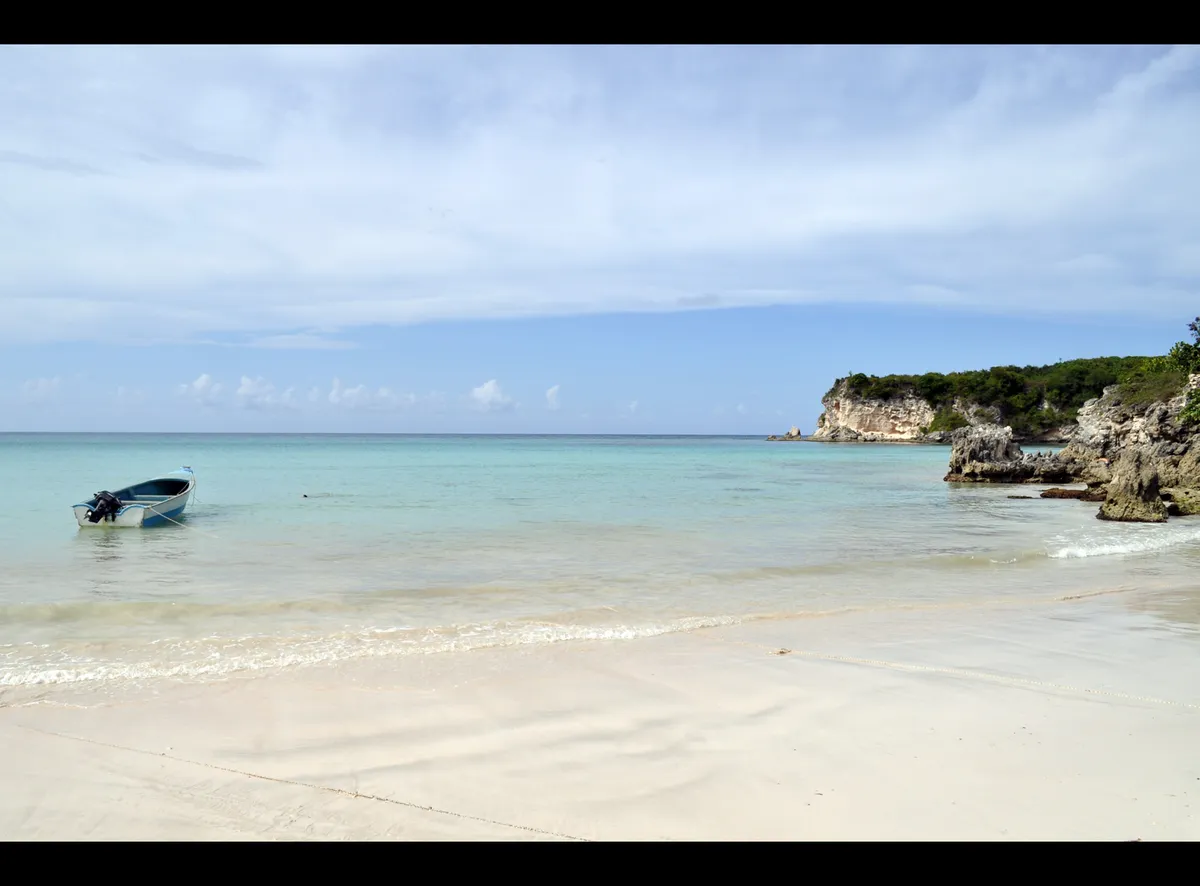
- Punta Cana (Playa Macao): the east-coast resort strip has no surf-and-stay camps — surfers base at a resort and take day lessons at Playa Macao, a scenic sandy beach break ~30 minutes north of the hotels.
Getting around
Fly into Puerto Plata (POP) for the north coast — Cabarete is about 25 minutes away — or Punta Cana (PUJ) for the east-coast resorts and Macao. The two zones are a long drive apart (roughly 4–5 hours); pick one per trip.
Flying your boards to Dominican Republic
Gregorio Luperón International Airport
Airport code POP. Airlines on our checked list serving it:
- Air CanadaFee applies
- CondorFee applies
- Copa AirlinesFee applies
- Delta Air LinesNo surcharge
- United AirlinesNo surcharge
- WestJetFee applies
Watch out · Delta Air Lines: Delta Connection regional flights cap item length at 72 in/183 cm. That's a straight single-dimension length cap, not directly comparable to the mainline 292 cm figure (which is a TOTAL linear L+W+H measurement) — but a board whose own length alone is over 183 cm can still be refused on a regional leg even though it is fine on Delta mainline aircraft.
Punta Cana International Airport
Airport code PUJ. Airlines on our checked list serving it:
- AeroMexicoFee applies
- Air CanadaFee applies
- Air EuropaFee applies
- Air FranceNo surcharge
- AviancaFee applies
- British AirwaysFree ≤ 240 cm
- Copa AirlinesFee applies
- Delta Air LinesNo surcharge
- LATAMFee applies
- United AirlinesNo surcharge
- WestJetFee applies
Air France: 180 cm limit on certain aircraft with smaller cargo holds.
Watch out · Air Europa: Air Europa's 250 cm limit is a SUM of length + width + height (not board length alone) and includes the bag — a boxed/bagged board over roughly 6'6" can push the total over the cap. Surf gear can't be booked online and must be arranged by phone or at a sales office, and carriage is explicitly subject to available hold space, so it isn't guaranteed even when booked.
Watch out · Air France: On some Air France aircraft the cargo hold cannot fit items over 180 cm, even though the general 300 cm total-linear-dims ceiling allows more — your board's actual acceptance can depend on which aircraft operates your route.
Watch out · Delta Air Lines: Delta Connection regional flights cap item length at 72 in/183 cm. That's a straight single-dimension length cap, not directly comparable to the mainline 292 cm figure (which is a TOTAL linear L+W+H measurement) — but a board whose own length alone is over 183 cm can still be refused on a regional leg even though it is fine on Delta mainline aircraft.
Surf camps in Dominican Republic
Surf twice a day (what does this mean?)
Camps whose own page says you can surf two sessions a day, either included in the price or as a paid extra. Camps we have not checked yet are left out, not guessed.